GOALS & IMPACT
Establish a disease and role agnostic documentation form
If you’re a numbers person
40 Diseases
supported by the form. Shipped and live!
Standardize UX across
programs building forms in silos
28 Patterns
shared over 6 programs to standardize 40+ forms
Build a design culture in a civic tech environment
60 Members
Engaged with design docs and tools to propel migration
THE FORM
What is the case management form?
Case management information is the operational layer for field staff. This helps move a case along, allows supervisors to review all cases are closed out correctly, helps plan for staffing, and is important for staff licensure. This information was scattered across a platform due for sunsetting.
Scattered across platform “A”
Caters to only nurses
Current Form
Migrate to platform “B”, Focus on nursing side
MVP
Expand form capabilities to support non-clinical investigators
Post MVP
SOLUTION HIGHLIGHTS
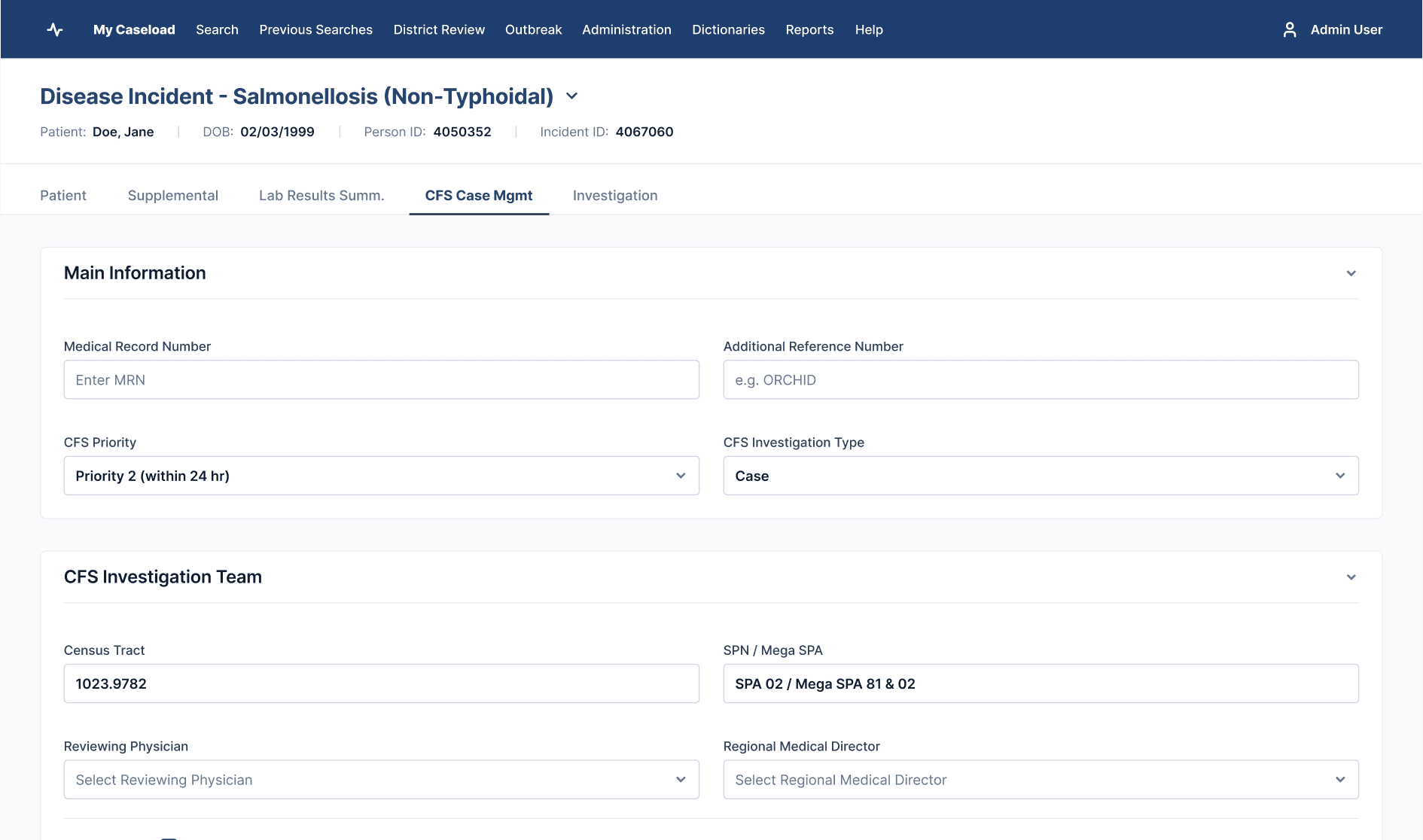
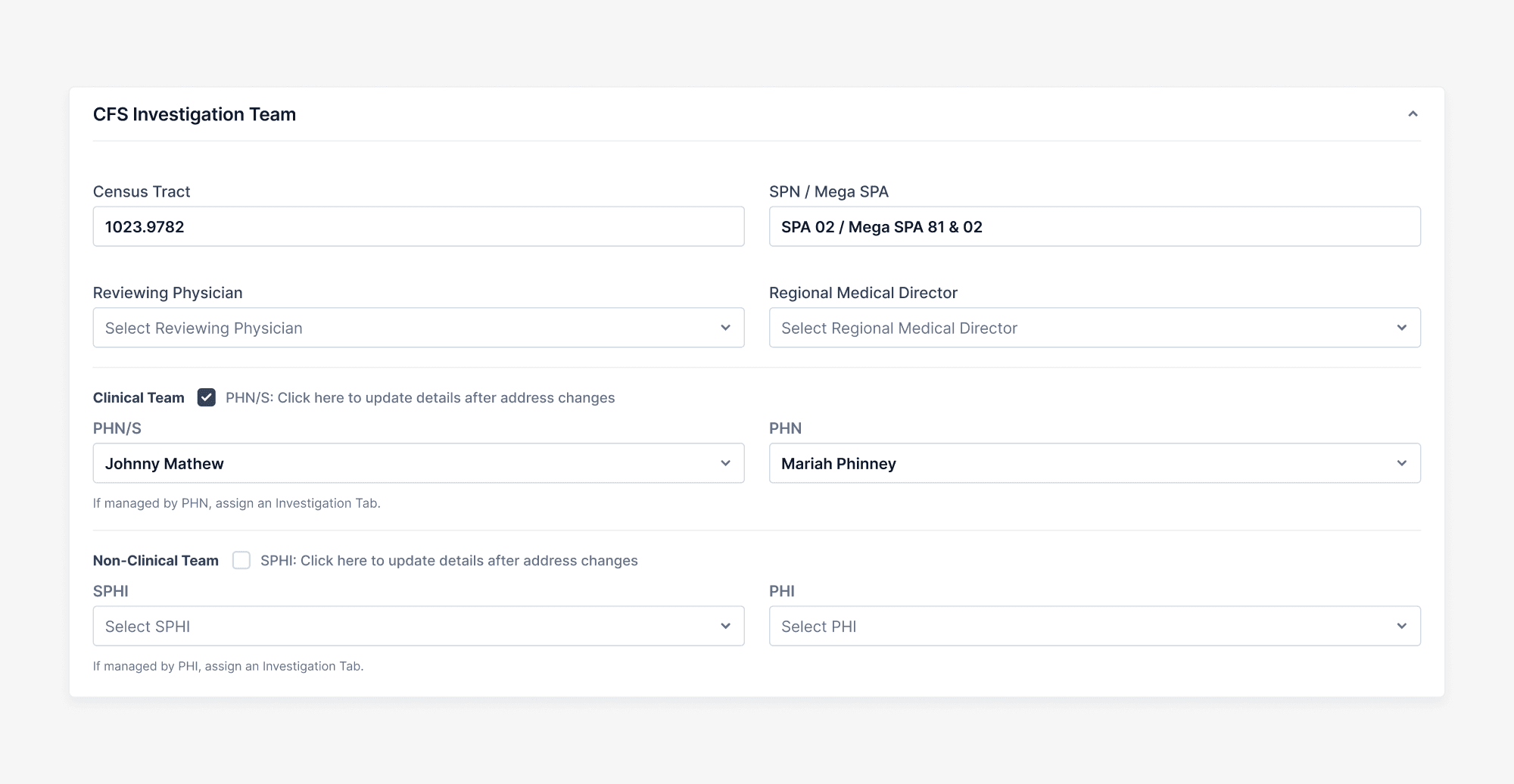
A single form for all investigative staff to document
The previous form only accounted for nurses. We added team documentation across clinical and non-clinical staff; For visibility, credit, and reporting.
Tracking case progress across the team
The Progress Status fields capture the stage at which the case is currently. This is important for a supervisor to know the case investigation is developing within the appropriate timeline.
BEFORE

AFTER

The updated “Progress Status” section shows who added the status
Status options available for all roles.
Adding all contact attempts, not just the successful one
BEFORE


AFTER

A table to document all contact attempts, method, and outcome
A separate notes section that works for all users
A running log for miscellaneous case notes to support field staff's habit of documenting everything to protect their license. The format supports all user's documentation style

SOLUTION HIGHLIGHTS
Trust as the biggest barrier in civic tech
Imagine waiting on a improved platform for more than a decade, while dealing with the realities of public health work. You’re bound to give up. Building trust was step 0 before we could begin migration.

Extending the form to multiple user groups
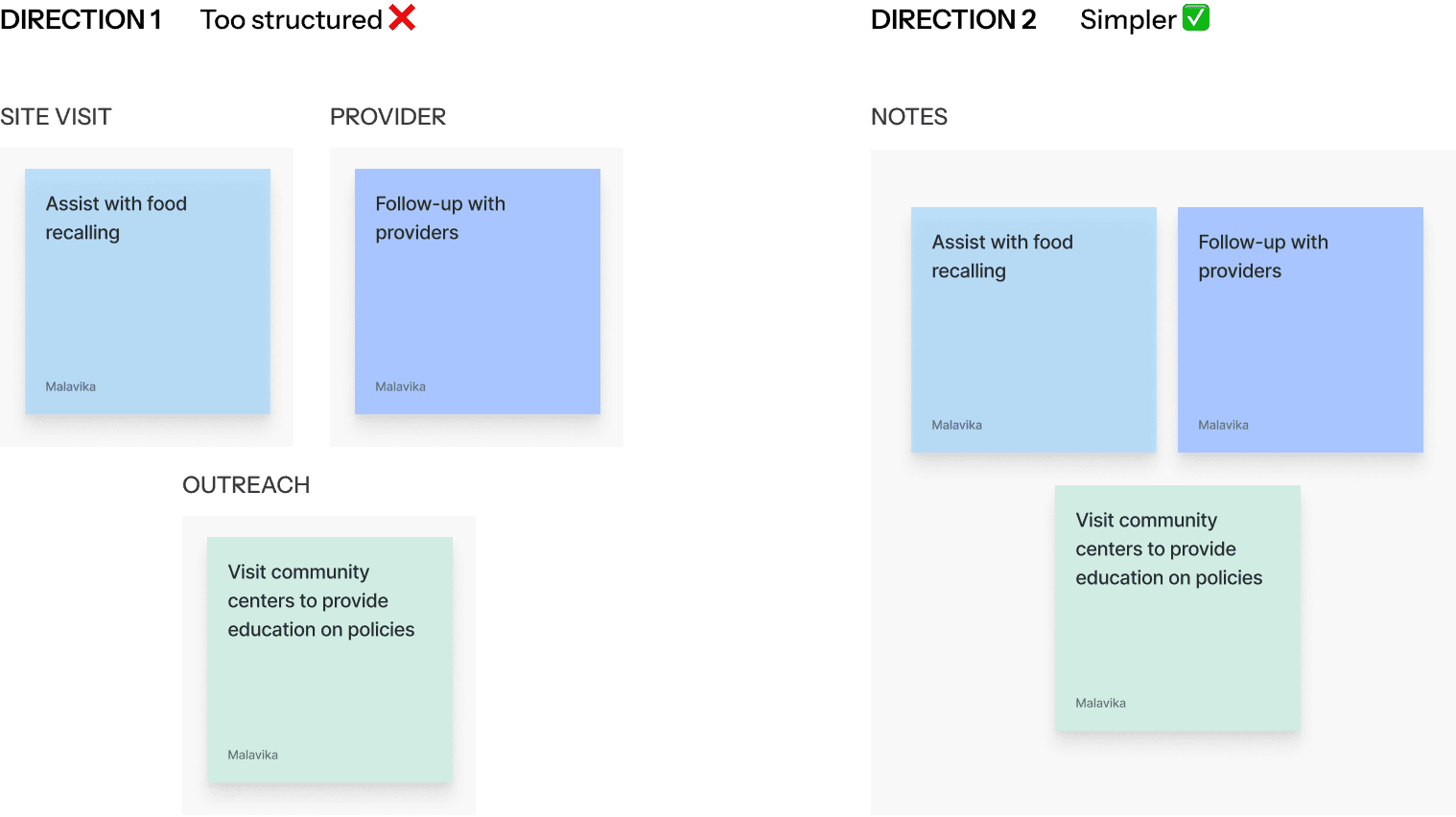
Post migration, our goal was to bring on the non-clinical investigators to use this form. We evaluated two paths: using an existing proposal which structured their notes differently, or our own form with additional fields.


Auditing both options
A three part process: understanding investigator workflows through interviews, auditing existing paper forms against both structural options, and running card sorting with staff to validate what level of structure actually made sense to them.
User Interviews to Map Workflows
20+ taskflows, 2 user journeys based on involvement

Comparing existing form requirements against both options

Card Sorting with users to align with workflows
Implementation Details
Investigators preferred less structure than the proposal assumed. The existing form, with a few additional fields, reflected how they actually worked. The form was extended to cover investigators and went live. It now supports the full field staff team.
We added fields to represent the full team, new contact attempt outcomes, and additional status options for investigator workflows. Additional changes also included splitting the form fields into multiple sections to make fields easy for staff to identify as something they need to fill.
USABILITY PATTERNS
Improving usability in a platform with scattered governance
Clinical forms at LA County are owned by six different disease programs, each building independently. Without governance over these forms, I could affect usability by creating a shared set of UX patterns and guidelines they could apply themselves.
Audited 14+ forms across 06 disease programs
28 UX patterns across field, section, and content levels
Usable across 08 platforms and 40+ diseases
28 Patterns across fields, sections, content

DOCUMENTATION
Building the documentation layer from scratch
Close to no documentation existed on the users, the stakeholders, or how governance actually worked. Understanding relationships and ownership had to be re-explained often among teams. As I learned, I documented these relationships and made them accessible to the whole branch.
Stakeholder Relationships & Governance

09+ Personas Documented

Service Maps highlighting roles of multiple stakeholders
These materials were presented to a branch of 60 people and are regularly referenced in meetings and larger stakeholder discussions to explain relationships and keep field staff needs visible

Bringing a design culture to civic tech
Inspired by Andy Matuschak's idea of working with the garage door open, I proposed making our design work visible to the whole branch in real time. The board became a shared resource across teams
THE GARAGE

We won the Promising Practice award at NACCHO, a national public health conference, for introducing human-centered design principles to center field staff perspectives. We're set to present this work at the conference to health departments across the country.


